Furnace Repair in Phoenix Metro: Same-Day Heating Pros
Phoenix gas furnaces run roughly 100-200 hours a year against 1,500+ in cold-climate states, so most failures land on the first 40°F morning in December when the system hasn't fired since February. Dust-coated flame sensors, stuck gas valves, and cracked igniters from 8 months of thermal cycling all show up in the same two-week window. CheckedHomePros matches you with 3 vetted AZ ROC C-39 pros offering full Phoenix heating services who serve your ZIP for fast diagnosis and a same-day fix when possible.
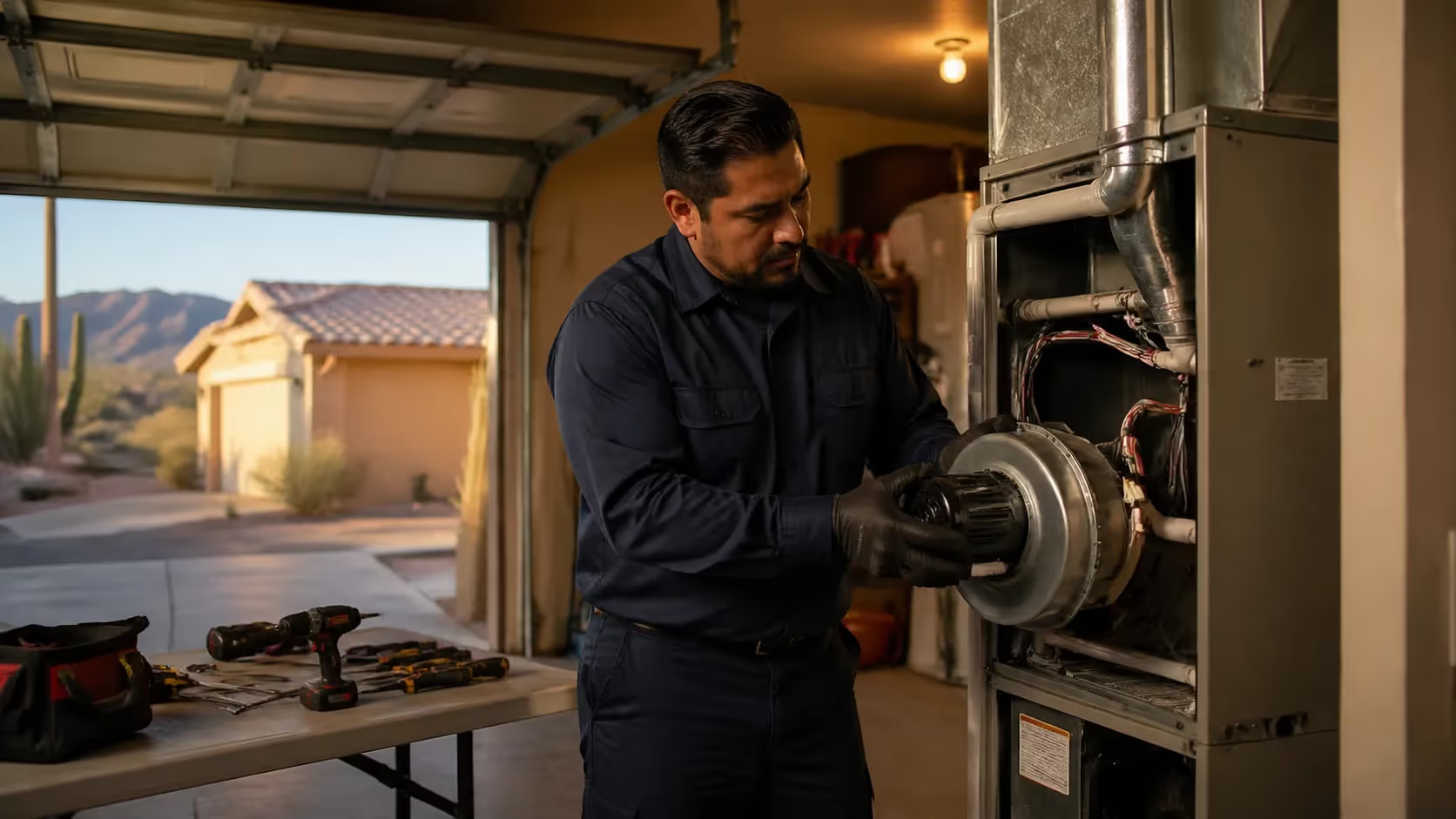
What furnace repair actually involves
Furnace repair covers gas ignition issues (hot-surface igniter, flame sensor, spark module), inducer and blower motor failures, gas valve problems, pressure switch faults, limit switch trips, heat exchanger inspection, and thermostat-to-furnace communication failures.
The most common Phoenix furnace repair is a flame sensor cleaning. It's a 30-minute fix that gets misdiagnosed all the time as a 'bad gas valve' that needs replacement.
Heat pump 'furnace repair' is a different animal. When a heat pump's auxiliary heat strip fails, it's an electrical issue (sequencer, contactor, or burned strip element), not a gas one. Make sure your contractor knows the difference before quoting.
Any gas furnace repair on a 10+ year unit should include a heat exchanger inspection with a borescope or combustion analyzer. A cracked exchanger leaks carbon monoxide into your home, and the leak isn't always obvious without measuring CO in the supply plenum. AZ ROC C-39 work standards treat a cracked exchanger as a red-tag, condemn-and-replace finding.
Most Phoenix tract homes run 80% AFUE single-stage gas furnaces (Trane XR, Carrier Comfort, Goodman GMSS, Rheem Classic). Master-planned new-builds post-2015 (Eastmark, Estrella, Verrado) often have 90%+ AFUE condensing two-stage units with PVC venting and condensate drains, which add their own failure modes.
Furnace removal service when replacement is necessary. A cracked heat exchanger, a red-tagged combustion failure, or a switch to a full heat pump means the old gas furnace has to come out. Vetted pros include the haul-away, gas-line capping per Southwest Gas standards, and venting disposition in the written quote, not as a surprise add-on at the end.
Phoenix-specific things to know
- Flame sensor coated with summer dust. Phoenix furnaces sit idle 8 months a year. The first cold morning, the rod can't read flame and the burner locks out after 3 tries. A 30-minute clean with steel wool and isopropyl alcohol fixes it. Easily misdiagnosed as a $600 gas valve.
- Cracked hot-surface igniter from dry-air thermal cycling. Silicon-nitride and silicon-carbide igniters in 80% AFUE Trane XR and Carrier Comfort units crack from repeated heat-cool cycling in Phoenix's dry 20% winter humidity. $250-400 replacement, plus the spec must match the OEM part number (Norton 271N vs. 271W matters).
- Stuck gas valve from idle solenoid wear. Honeywell VR8205 and White-Rodgers 36J series valves can stick after a 6-8 month idle stretch. A real pro tests the valve with a manometer (inlet 7 inches WC, manifold 3.5 inches WC for natural gas) before swapping it.
- Cracked heat exchanger in attic-mounted 20+ year furnaces. Phoenix attics swing from 140°F summer to 35°F winter mornings, and that thermal range fatigues the secondary cells on older units. A C-39 finding here is a red-tag, no debate: replace the furnace, do not repair.
- LP-configured furnace running on natural gas (or vice versa). Phoenix Metro is served by Southwest Gas with natural gas, but some builder-overstock furnaces arrive with LP orifices and high-pressure regulators. Symptoms: yellow flames, sooting, sky-high gas bills. Re-orifice and re-tune manifold pressure to fix.
- Flame rollout from undersized combustion air in tight new-builds. Post-2009 IECC envelope homes in Eastmark (Mesa), Estrella (Goodyear), and Verrado (Buckeye) are tight enough that an interior-closet furnace can starve for combustion air, trip the rollout switch, and refuse to relight. Code requires 1 sq inch of free combustion air per 1,000 BTU input above and below for confined spaces. Many builds skipped it.
- Condensing furnace condensate drain frozen or clogged. 90%+ AFUE Trane S9V2, Carrier Infinity 96, and Rheem Prestige units produce acidic condensate that drains via PVC. A clog at the inducer trap or a frozen line on a 28°F morning trips the pressure switch and locks the furnace out. Drain flush and trap clean is the fix.
- Failed auxiliary heat strip sequencer on heat pumps. The home gets cold while the outdoor unit hums along, and the issue gets misdiagnosed as a refrigerant problem. A 5kW or 10kW strip with a failed sequencer or burned element on a Trane 4TWR or Carrier 25HCB needs an electrical diagnosis, not a gas tech.
- CO test skipped on attic and garage installs. Many Phoenix furnaces sit in attics or 2-car garages with marginal ventilation. Skipping ambient CO measurement and a draft test on a 15+ year furnace is a safety oversight no C-39 contractor should accept.
Typical furnace repair pricing in Phoenix
$89–$1,400
$89-$149 diagnostic. $150-$450 typical repair (flame sensor, hot-surface igniter, pressure switch, blower capacitor). $700-$1,400 for major parts (gas valve, inducer motor, blower motor, control board).
What to ask each pro you compare
- ✓Will you run a combustion analysis (CO, CO2, O2, stack temp) and ambient CO test before signing off?
- ✓Are you inspecting the heat exchanger with a borescope, or just a visual mirror check?
- ✓What's the manifold pressure reading after the repair? (3.5 inches WC for natural gas, 11 inches WC for LP. Phoenix is natural gas.)
- ✓If it turns out to be a flame sensor, what's the labor cost? (Don't accept a $400 'gas valve' upsell instead.)
- ✓Are you AZ ROC C-39 licensed for residential, and do you carry a gas-piping endorsement if the gas line needs work past the appliance valve?
- ✓Can you check the venting, flue, and combustion air openings while you're here?
- ✓What's the diagnostic fee, and is it credited toward the repair?
Our vetting standard for furnace repair pros
- ✓Active AZ ROC C-39 (residential) license verified
- ✓Gas-piping endorsement on file if work extends past the appliance shutoff valve
- ✓Combustion analyzer on the truck (Testo 310, Bacharach Fyrite Insight, or equivalent) with current calibration
- ✓Borescope for heat exchanger inspection on units 10+ years old
- ✓Manometer for manifold and inlet gas pressure verification
- ✓Ambient CO meter, separate from the combustion analyzer, calibrated within 12 months
- ✓Same-day winter availability December through February
- ✓Honest about flame sensor vs. gas valve diagnosis (no $600 valve swap before cleaning the sensor)
Furnace Repair: common questions
My furnace won't turn on after summer, what's wrong?
Should I repair or replace my Phoenix furnace?
How much does a Phoenix furnace repair cost?
Is carbon monoxide a real concern with my furnace?
How fast can I get furnace repair in Phoenix during a cold snap?
My new Eastmark or Verrado home's furnace keeps locking out, what's happening?
Why is my Phoenix furnace running yellow flames and burning through gas?
Do you provide furnace removal in Phoenix?
Related HVAC services
Furnace Repair. Reading from our Phoenix HVAC blog
Federal 25C Tax Credit 2026: Phoenix HVAC Guide
How Phoenix homeowners claim the $2,000 heat pump credit and $1,200 envelope cap on IRS Form 5695, plus the AFUE and SEER2 minimums that qualify.
Best published: May
Heat Pump vs AC in Phoenix
Why heat pumps make increasing sense in Phoenix in 2026, and the few situations where a traditional AC + furnace still wins.
Best published: February
Phoenix Haboobs and Your AC Unit
What dust storms actually do to your condenser, and the post-storm checks every Phoenix homeowner should run.
Best published: JuneFurnace Repair by Phoenix Metro city
Local pricing, building-stock notes, and HOA considerations vary by city. Pick yours:
Get 3 free quotes for furnace repair
Up to 3 vetted local pros. 24h. Free for homeowners.